

India’s textile growth is colliding with its waste problem
This week’s global fashion business round-up also looks at Turkey’s EU Green Deal challenge and Indonesia’s booming thrift market.
This week’s global fashion business round-up also looks at Turkey’s EU Green Deal challenge and Indonesia’s booming thrift market.
As the global fashion and textile industry accelerates its transition toward more sustainable and regulated models, emerging markets are facing increasingly complex trade-offs between growth, compliance and competitiveness. This week, three markets illustrate how uneven and consequential that transition can be: India’s textile sector grappling with waste management, Turkey adjusting to the European Union’s Green Deal, and Indonesia navigating the unintended consequences of its booming second-hand clothing market.
India: A Textile Powerhouse Confronts Its Waste Problem
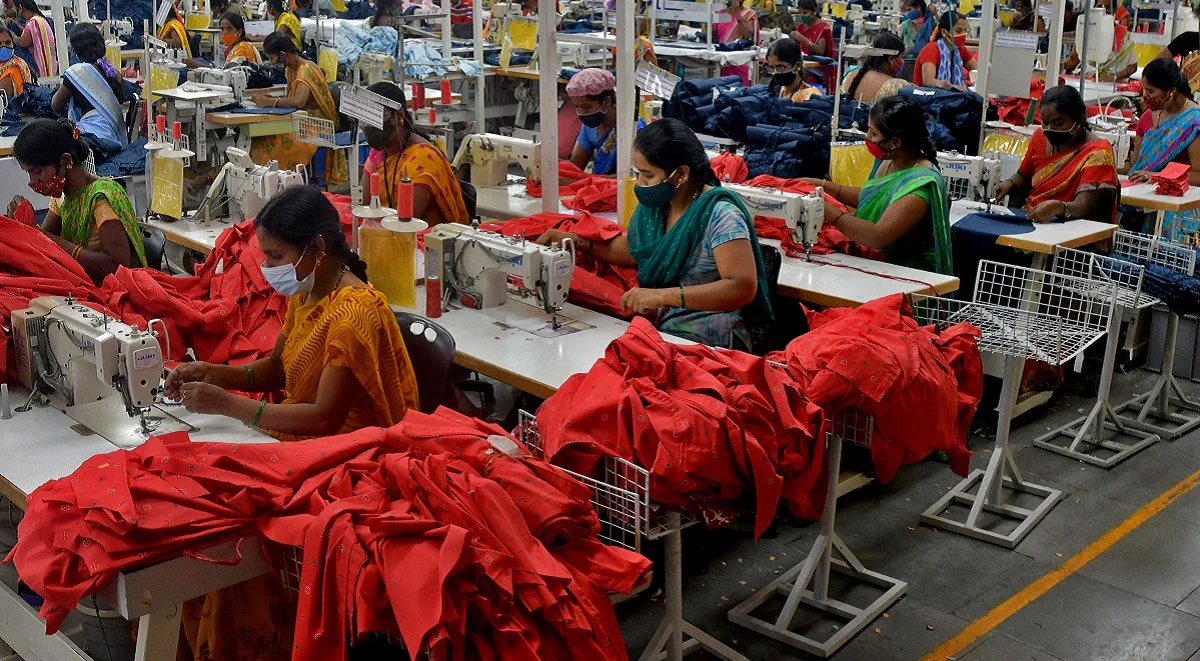
India remains one of the world’s largest textile and apparel producers, employing millions and supplying global fashion brands across value chains. Yet the sector is under mounting pressure as waste generation outpaces the country’s capacity to manage it effectively.
Despite incremental improvements in recycling rates, the Indian textile industry continues to rely heavily on linear production models. Post-consumer textile waste is largely diverted to landfills or informal processing channels, while energy-intensive manufacturing processes and low renewable energy adoption persist. The result is a widening gap between India’s ambitions to position itself as a sustainable manufacturing hub and the realities on the ground.
This challenge is not merely environmental. As international buyers tighten sustainability requirements and demand greater transparency across supply chains, India risks losing competitiveness if large-scale investments in waste infrastructure, energy transition and circular systems are not accelerated. Integrating the informal waste sector into formal, value-generating systems remains one of the country’s most pressing and unresolved structural challenges.
Turkey: The EU Green Deal Redefines the Rules of Trade
Turkey’s textile and apparel industry, deeply integrated into European supply chains, is entering a critical adjustment phase. The European Union’s Green Deal and related mechanisms including carbon reporting requirements and extended producer responsibility are reshaping access conditions to the EU market.
For Turkish manufacturers, the implications are significant. Compliance now requires measurable reductions in emissions, traceability across production stages and investments in cleaner technologies. While this transition raises short-term costs, it also opens the door to EU-backed financing and long-term strategic positioning as a preferred nearshoring partner.
Recent EU-supported funding initiatives aimed at greening and digitising Turkey’s fashion sector signal that sustainability is no longer a reputational issue but a trade imperative. For exporters, the choice is increasingly binary: adapt quickly or risk erosion of market share in Europe.
Indonesia: When the Thrift Boom Becomes a Market Disruption
In Indonesia, the explosive growth of the second-hand clothing market reflects broader global shifts toward affordability and sustainability. Imported thrift clothing has flooded both online and offline channels, appealing to cost-conscious consumers but destabilising domestic textile producers.
Local manufacturers report declining demand as second-hand imports undercut prices, while waste management systems struggle to absorb the influx of low-quality garments with limited resale or recycling value. In response, Indonesian authorities have taken decisive regulatory action, restricting the online sale of imported second-hand clothing and attempting to protect domestic industry and employment.
The situation exposes a paradox increasingly visible across emerging markets: while circular consumption models are celebrated globally, their unregulated expansion can undermine local manufacturing ecosystems and generate new waste challenges rather than solving existing ones.
What This Means for Global — and African — Markets
Taken together, these developments highlight a common reality: sustainability, regulation and industrial competitiveness are now inseparable. Markets that fail to align waste management, trade policy and industrial strategy risk exclusion from global value chains.
For African textile and fashion ecosystems, these global shifts offer both cautionary lessons and strategic opportunities. As the continent seeks to expand local manufacturing and move up the value chain, the experiences of India, Turkey and Indonesia underline the importance of building circular systems early — before scale magnifies structural weaknesses.
In the next phase of global fashion, access to markets will increasingly be determined not only by cost and creativity, but by data, compliance and environmental credibility. Those who anticipate this shift will define the future geography of fashion production.
BAICI — Business of African Industry & Creative Influence
Decoding global markets to inform Africa’s creative and industrial strategy.